Monday, 26 February 2018

FaceTime in Apple Devices

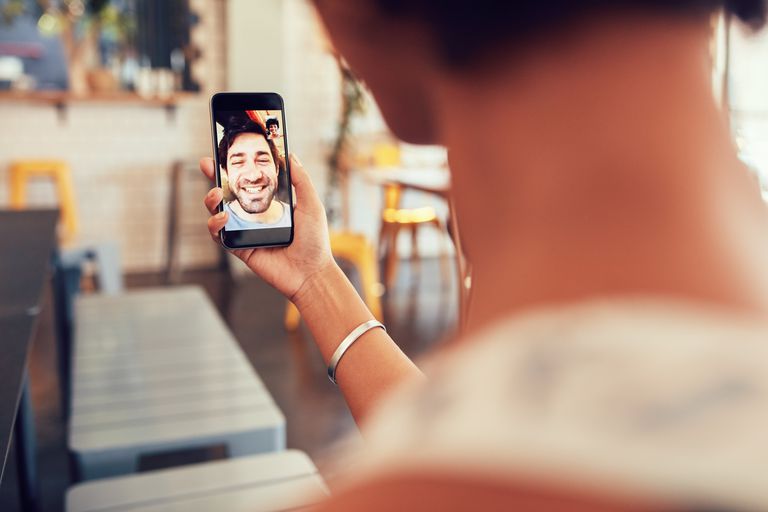
FaceTime is Apple's video and audio calling service. Think of it as a phone that uses your Wi-Fi or cellular data connection instead of traditional phone lines. You can use it from any iPhone, iPad, iPod touch or Mac, to call anyone else using any one of those devices. That's what makes FaceTime perfect for seeing and hearing family during the holidays, when you're on the road, keeping grandparents connected to grandkids, making international calls when you have no long-distance plan, getting a second opinion on that jacket while you're out shopping, sharing a show, making a meeting, and much, much more.

Placing FaceTime video or audio calls is ridiculously easy to do. There's a built-in FaceTime app on every iPhone, iPad, iPod touch, and Mac, and FaceTime is also integrated into the Phone app on iPhone, As long as you're on Wi-Fi or cellular data, you can stay in touch with family and friends, even while traveling, connect with anyone in the world, even without a long distance plan, and not only hear but see the people you're talking to.

FaceTime starts off using your iPhone phone number and Apple ID email address as the way for other people to reach you. You can add new addresses — for example, a work or school address —and remove them at any time, though, and set any active number or address as your Caller ID. That way, no matter which Apple device you're using to make a FaceTime call, no one will ever be confused about who's calling them.

You can block a contact from trying to FaceTime you and phone you and iMessage you  at any time. Whether it's a former significant other, friend, relative, or associate you've fallen out with, or a spammer or prank caller harshening your mellow, block them once and they're silenced forever. (Or at least until you decide to unblock them.)


ROBOTIC VACUUM CLEANER

There are those of us who clean once a week, and there are those of us who clean when the in-laws come to visit. The appeal of the robotic vacuum reaches both camps: Either way, the house is a bit more spotless with minimal human input.

Today's robotic vacuums are a far cry from the first models that you had to track down, stranded somewhere in your house, by their melancholy, "I'm out of power" beeping. The latest products clean your house, remember the layout to increase efficiency, dump their own dirt in a receptacle and find their way back to the charging station so they can rejuice.

The Roomba Red is approximately 13 inches (33 cm) in diameter and 3.5 inches (9 cm) tall. An external examination reveals the following parts:

Roombas run on a rechargeable NiMH battery. The Roomba Red battery pack is rated at 3 amp-hours and takes about seven hours to fully charge to about 18 volts. Some of the more recent Roomba models have cut that charge time down to about three hours. A full charge equals approximately two hours of cleaning time, which in the Roomba world means vacuuming three medium-size rooms before it needs to rejuice. The mobility system consists primarily of two motor-driven, tracked wheels. Roomba steers by alternating the power supplied to each wheel.

Roomba has a total of five motors:

  • ·         One driving each wheel (2 total)
  • ·         One driving the vacuum
  • ·         One driving the spinning side brush
  •       One driving the agitator assembly


MY SCIENCE COMPUTER COVER BOOK

Assalamualaikum dan salam sejahtera semua. Kali ini saya nak berkongsi pengalaman saya menghasilkan sebuah cover buku menggunakan aplikasi Adobe Phothoshop. Sejujurnya ini merupakan pengalaman pertama saya menggunakan aplikasi ini dan hasilnya Alhamdulillah bagi saya agak memuaskan. Tapi bagaimana dengan anda? Then, percayalah dengan menggunakan aplikasi ini kita dapat menghasilkan satu karya yang menarik dalam mengedit gambar. Gambar di bawah ini adalah hasil tugasan saya untuk subjek Sains Komputer. Jadi, saya berharap anda semua suka dan dapat memberi komen yang positif supaya saya dapat menghasilkan hasil lebih baik daripada ini selepas ini. Hee terima kasih bye!


Monday, 5 February 2018

GPS

Hye everyone I'm Afrina. 😉

GPS😀

WHAT IS GPS?
  • The Global Positioning System (GPS) is a satellite-based navigation system made up of at least 24 satellites. GPS works in any weather conditions, anywhere in the world, 24 hours a day, with no subscription fees or setup charges.
HOW GPS WORKS?
  • GPS satellites circle the Earth twice a day in a precise orbit. Each satellite transmits a unique signal and orbital parameters that allow GPS devices to decode and compute the precise location of the satellite. GPS receivers use this information and trilateration to calculate a user's exact location. Essentially, the GPS receiver measures the distance to each satellite by the amount of time it takes to receive a transmitted signal. With distance measurements from a few more satellites, the receiver can determine a user's position and display it electronically.
  • To calculate your 2-D position (latitude and longitude) and track movement, a GPS receiver must be locked on to the signal of at least 3 satellites. With 4 or more satellites in view, the receiver can determine your 3-D position (latitude, longitude and altitude). Generally, a GPS receiver will track 8 or more satellites, but that depends on the time of day and where you are on the earth. 


HOW ACCURATE IS GPS?
  • Today's GPS receivers are extremely accurate, thanks to their parallel multi-channel design. Our receivers are quick to lock onto satellites when first turned on. They maintain a tracking lock in dense tree-cover or in urban settings with tall buildings. Certain atmospheric factors and other error sources can affect the accuracy of GPS receivers. Garmin GPS receivers are typically accurate to within 10 meters. Accuracy is even better on the water.
  • Some Garmin GPS receiver accuracy is improved with WAAS (Wide Area Augmentation System). This capability can improve accuracy to better than 3 meters, by providing corrections to the atmosphere. No additional equipment or fees are required to take advantage of WAAS satellites. Users can also get better accuracy with Differential GPS (DGPS), which corrects GPS distances to within an average of 1 to 3 meters. The U.S. Coast Guard operates the most common DGPS correction service, consisting of a network of towers that receive GPS signals and transmit a corrected signal by beacon transmitters. In order to get the corrected signal, users must have a differential beacon receiver and beacon antenna in addition to their GPS.


Monday, 29 January 2018

IPHONE X (RM5799)

This phone is simply gorgeous. It’s slightly taller than the Iphone 8 (and 7 and 6) but much narrower and smaller than the iPhone 8 Plus. It strikes the perfect balance, especially since you’re getting a 5.8-inch display here.

The aluminium sides have been swapped out for stainless steel – as seen on the Apple Watch and the front and rear of the device are glass. I received the Silver variant for review and, unfortunately, it wasn’t long before it was covered in fingerprints, those shiny sides being a particular magnet. This is a phone that looks fantastic straight after a wipe-down; not so much a few hours after it’s been in your greasy palms.

Also of concern is how the iPhone X will fare over time. No matter how unscientific they might be, drop tests indicate that the finish here doesn’t lend itself well to wear and tear. After all, the stainless steel Apple Watch I’ve been using is a scratched-up mess. As a result, my iPhone X has spent much of its time inside an Apple case, but this certainly sees it lose points in the glamour stakes.

It’s around the front of the iPhone X that the magic happens, though. The iPhone 8 has an extensive bezel running around the display, but the iPhone X doesn’t. Similar to the Samsung Galaxy S8, Apple has pushed out the screen to the edges here, significantly reducing the bezel. A noticeable black border remains, but it adds a nice contrast to the bright display.

The lack of a thick bezel means there’s no room for the Home button, a feature present on  every single iPhone iteration until now. As a result, there’s no Touch ID fingerprint scanner. Instead, the iPhone X sees Apple introduce facial recognition a bold move.

All of the components for Face ID (infrared camera, flood illuminator, dot projector) are housed in what’s affectionately being called the ‘notch’. You’ll find the notch at the top of the display, where it somewhat disrupts that all-screen look. There’s been much controversy concerning the notch with regards to it completely ruining the immersive experience. Once you begin using the phone, however, I’ve found that it simply blends into the background.


Sure, you notice it when the screen is on, plus it juts into video if you’re playing something full-screen. But in all other instances it fades into the background. Certain apps Apple’s Music being one use software trickery to blank out the notch, and some apps clearly need to be updated to ensure important buttons aren’t hidden by it.